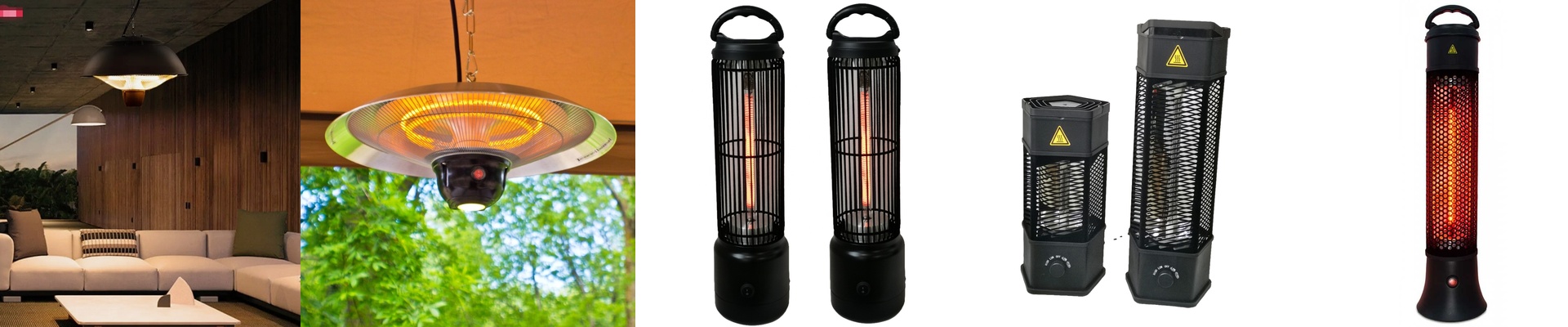
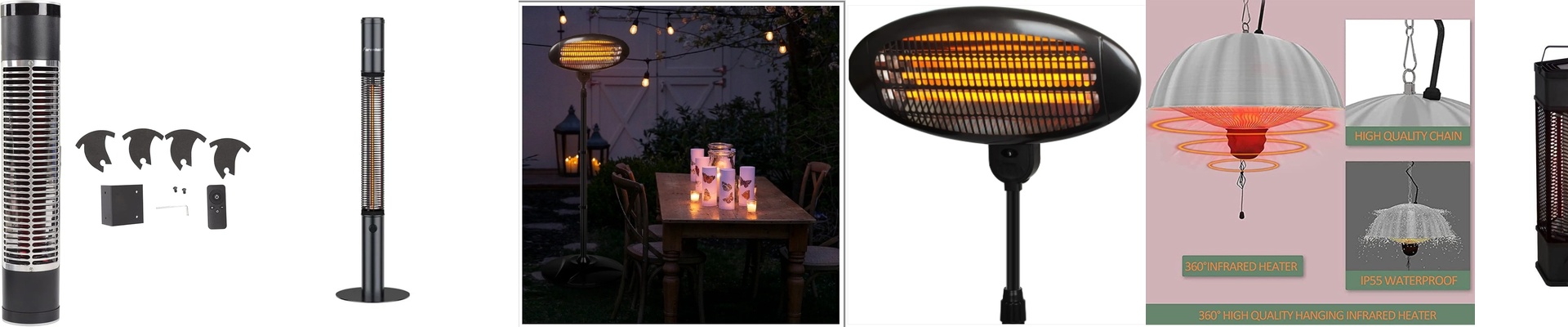
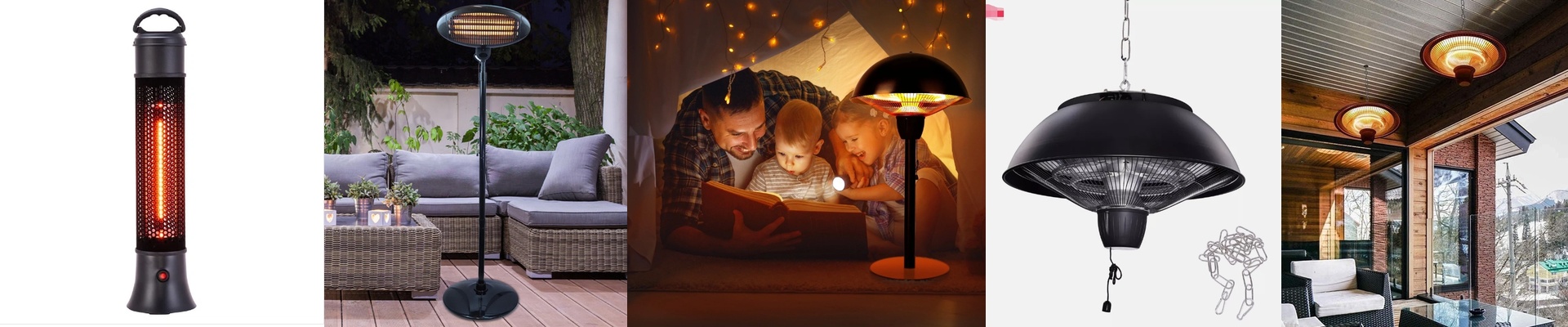
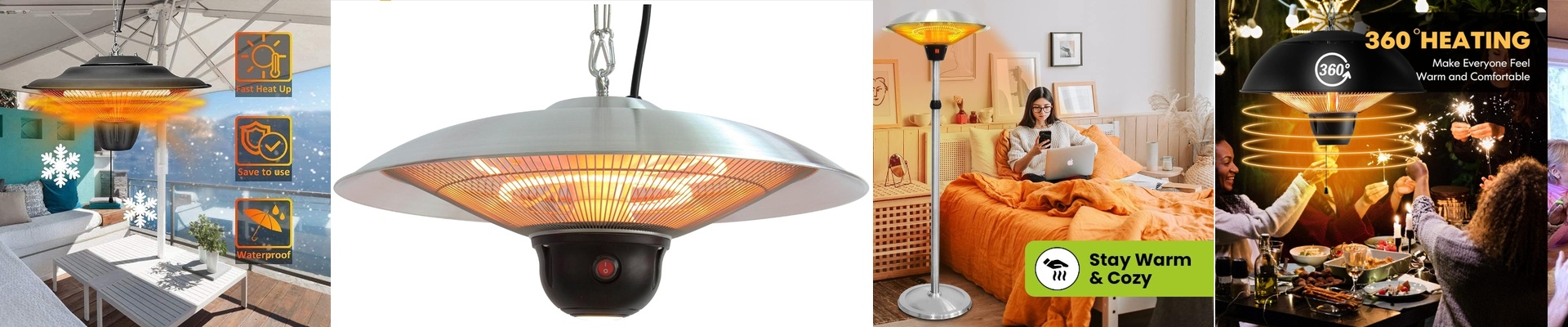

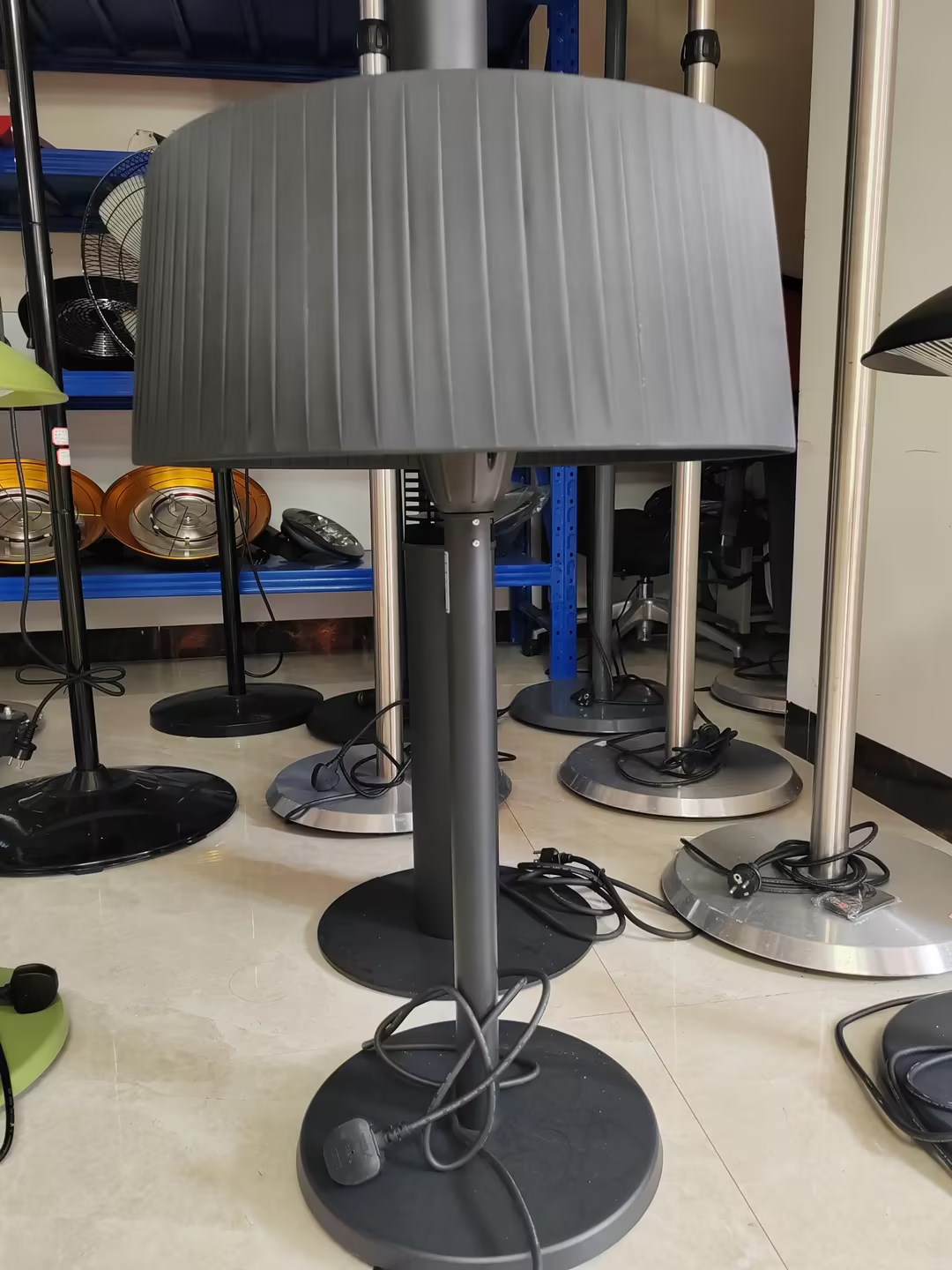
Ten years back, we were the folks behind the scenes, building heating systems for other brands. We saw what holds up, what doesn’t, and what people actually need when the air turns cold. Now, we’re putting that experience into an electric heater that delivers proper infrared warmth—without asking you to compromise on price.
What’s actually under the hood
We run a carbon fiber element inside a sealed quartz tube. That’s the core of infrared heat: it warms people and objects directly, not the air. You feel the comfort fast—often within seconds of flipping it on—no waiting around for the room to “catch up.” It plugs into a standard 120V outlet, draws 1500W, and covers compact to mid-size spaces. The footprint is small enough to live on a patio table or sit beside a reading chair. A built-in thermostat keeps output steady, and tip-over protection shuts the unit off if it gets knocked over.
Where this shines
We designed it for those moments when warmth can’t wait: a cold morning on the deck, an evening outside that you want to stretch a little further, or a drafty corner that never seems to warm up. Infrared heat comes on quickly and holds steady, so you can get outside sooner—and stay a bit longer. Indoors, it gives you targeted heat where you need it, so you don’t have to crank the central heat. Over time, that focused approach can help keep energy use in check.
A few practical notes
Infrared heat works best with direct line-of-sight, so placement matters. Keep it within a few feet of where you sit, and don’t block the radiant path with furniture or curtains. This is a residential unit. The exterior surface stays cool, but the heating element runs hot—give it clearance, especially around kids and pets. And keep expectations straight: unlike a gas patio heater, electric infrared heat doesn’t blanket a wide yard. It’s built forcozy, defined zones.