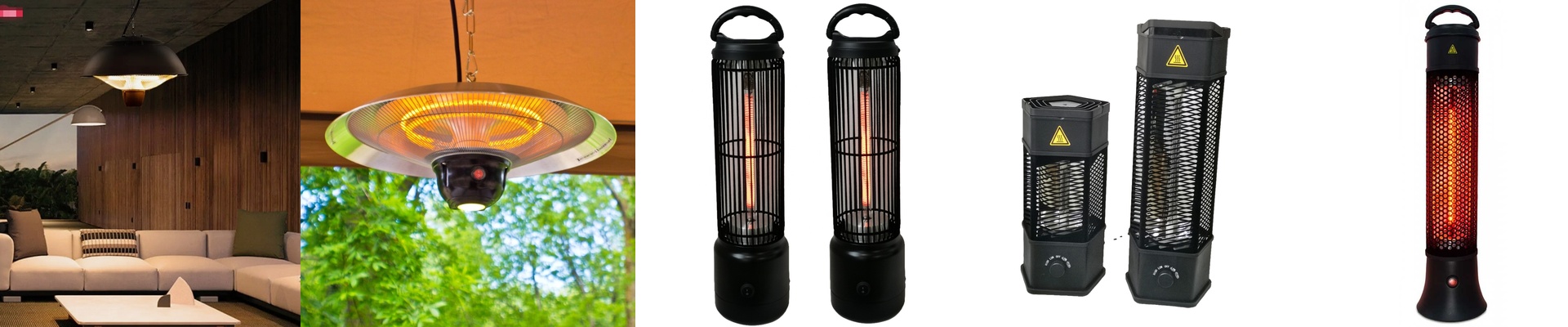
On the litho floor, a single water mark is enough to kill an entire lot. You run the deionized water clean, and if you don’t get the moisture off cleanly, you’re asking for contamination—and kissing good photoresist adhesion goodbye. Conventional drying leaves thermal gradients across the wafer, which throws off your soft bake and hard bake profiles. And if the heaters aren’t rock-stable, the particles they shed can push cleanroom particle counts out of spec. So what do we do about it? We built the deionized water drying lamp around short-wave infrared emitters sealed in a quartz envelope. It’s non-contact, heats fast, and the response is sub-second. Wafer-level thermal uniformity stays within ±0.1°C across the process window, so you don’t lose the dimensional control you need on the photoresist. Output holds steady from 10% to 100% duty cycle, which is exactly what keeps line-to-line repeatability tight. The lamp body is rated for Class 1–100 cleanrooms, and we’ve verified zero particle generation at 0.1 μm. Power density is tuned to strip surface water without driving solvent loss out of the resist, so your thermal budget stays within spec. In wafer cleaning and drying, this thing dries fast and even—no streaks, no edge beading left behind before you even get to photoresist processing. When you hit the photoresist bake steps, that same thermal discipline cuts CD shift and helps yield. Energy use drops because the heat goes straight into the target, not into warming up the ambient gas. Reliability is proven in 24/7 fab life: 5,000+ hours with less than 5% output drift, and zero unplanned downtime in high-volume lines. Installation needs a dedicated, shielded power bus and line regulation verified to keep that ±0.1°C uniformity intact. The lamp plays nice with standard OEM tool interfaces, but keep the optical path free of water films and condensation—run a purge or local exhaust to avoid humidity cycling. Plan on calibrating the emitters every 1,000 hours to keep repeatability where it needs to be.