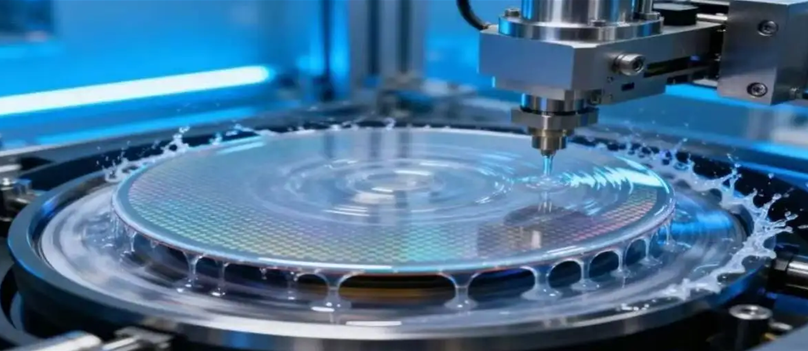
On the lithography floor, a 95°C soft bake isn’t optional—it’s the spec. You let that temperature drift by ±0.5°C and the photoresist profile shifts. The line-width control you sweat for falls apart. What you need is heat that hits instantly, holds steady, and doesn’t dump particles into the cleanroom. What matters under the hood We run fast-response infrared heater bulbs—short-wave halogen elements inside a high-purity quartz envelope. They snap to temperature in milliseconds, which gives you tight closed-loop control. Wafer-level uniformity stays within ±0.1°C across the bake surface. The filament geometry and reflector layout are laid out to kill hot spots and edge roll-off, so every die gets the same thermal budget. These bulbs are built for Class 1–100 cleanrooms, and we verify zero particle generation with in-situ monitoring during long runs. Why it holds up in photoresist processing In soft bake and hard bake alike, repeatability is the scoreboard. Fast response shortens the soak ramp, so you cut cycle time without giving up profile control. Cleanroom-compatible materials and solid seals keep outgassing and contamination out—particle counts stay flat, and tool uptime stays up. You also use less energy, because the heater delivers heat on demand and cools quickly between bakes, cutting thermal inertia and waste. What you need to plan for Installation comes down to matching the tool: socket, voltage, and aperture geometry. If the reflectors don’t match or the fixtures are undersized, you’ll see non-uniformity. Expect a trade-off: the peak power density gives you speed, but it demands stable cooling and clean electrical contacts. We provide dimensional drawings and calibration maps for each bulb, so you can integrate without having to re-qualify the whole thermal stack.