
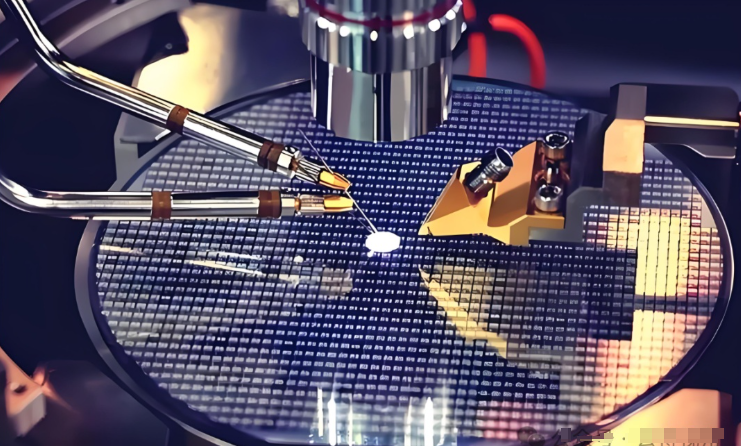
Getting Heat Right in Your Smart Fab
If you’re putting together a Smart Fab for Industry 4.0, you have to stop thinking about heat the old way. Forget those clunky legacy heaters. To actually make a digital production line work, you need thermal data you can trust, and you need it fast. That’s why we lean on infrared (IR) systems. Instead of wasting time heating up the air in a giant oven, IR beams energy straight into the wafer or substrate. It’s direct. It’s efficient. Fitting more power into less space Modern fab layouts are tight. You don’t have room to waste. We set up our IR systems to pack a massive amount of heat into a tiny footprint. The best part? You can tweak the lamps using PLC or PID controllers. This means you aren’t just guessing; you have total control over the thermal profile in real-time. You can wire the heating zone right into your data system, tracking every power spike and temperature shift. Suddenly, heat isn’t just a byproduct—it’s a data point for your digital twin. No more waiting around Here is the real win: speed. With IR, there’s no “warm-up” lag. You flip the switch, and the target feels the heat instantly. In semiconductor work, where your thermal budget is razor-thin, that speed is everything. You can ramp temperatures up or down in a matter of seconds. It’s snappy. The trade-off (because there’s always one) Now, let’s be honest. Pushing high-density IR arrays creates a lot of waste heat. If you crank the wattage to shave a few seconds off your cycle time, your HVAC and cooling loops are going to feel it. If you don’t balance the cooling side of the equation, things get messy. You’ll start seeing sensor drift, or worse, you’ll burn out your equipment. You’ve got to plan for the exhaust. Making it all talk to each other A “smart” fab only works if every piece of gear plays nice with the others. We build our IR systems to speak the same language as your industrial communication protocols. This way, your thermal data isn’t just a needle moving on a gauge—it’s a live variable in your software. You end up with a closed-loop system that automatically adjusts the heat based on how many wafers are actually moving through the line.