



Getting Your Thermal Data Right for IR Semiconductor Heaters
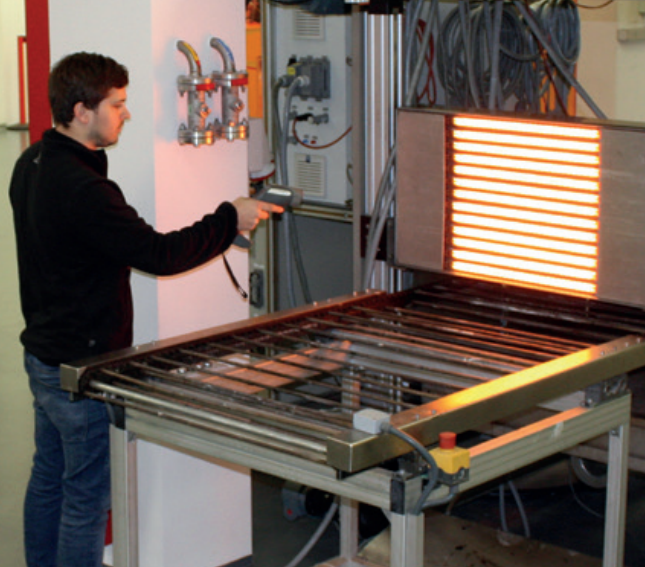
If you’re building a smart fab, you’ve probably realized that just “checking the temperature” isn’t enough. You need data that actually tells you what’s happening to your wafer in real-time. For us, that means pairing specialized thermocouples with infrared (IR) systems to make sure the heat coming out of the lamp is actually hitting the surface exactly how you want it.
The nitty-gritty of IR sensing
IR systems pack a punch. They deliver energy fast—really fast. To keep up, you need thermocouples that can react just as quickly. Here’s the thing: in a digital setup, your sensor does more than just tell you the heater is running. It’s constantly feeding voltage data back to your PLC to tweak the power cycles on the fly. But watch out for “thermal mass.” If your sensor is too bulky, it lags. And in this business, a lag means you overshoot your target temperature. That’s how you ruin a wafer. That’s why we stick to thin-gauge junctions—they keep the response time snappy.
Making the data actually useful
The real beauty of a digitized fab is the level of detail you get. We plug these sensors into a system that logs every single tiny dip or spike in heat. Plus, it lets you see when your gear is getting tired. If you notice the system is pulling more power than usual just to hit the same temperature, you know your heating element is wearing out. You can just swap it out during a scheduled break instead of dealing with a total meltdown in the middle of a production run.
The trade-offs (because nothing is perfect)
Precision isn’t free. Those high-sensitivity thermocouples? They’re fragile. Since you’re working in a high-wattage IR environment, the sensors themselves can get hit by radiant heat. This causes “drift,” where your readings start lying to you. You’ve got to be obsessive about shielding your lead wires. If you don’t pick insulation that can handle the actual heat inside the chamber, the jackets will melt. Then your data stream crashes, and you’re flying blind.