


Getting Your Thermal Control Right in a Smart Fab
If you’re building a Smart Fab for Industry 4.0, you’ve probably realized that the old way of heating things just doesn’t cut it. You can’t just “turn on the heat” and hope for the best. You need actual data and precision. That’s where vacuum-compatible IR heaters come in. Since they move energy directly to the target without needing air or gas to carry it, you don’t have to worry about gunking up your high-vacuum chambers with contaminants. It’s cleaner. Simple as that.
The Reality of Vacuum Physics
Here’s the thing about vacuums: convection is dead. It’s just not there. You’re relying entirely on radiation. We build these IR systems to push that radiant flux exactly where it needs to go. The goal is to get your substrate up to temp without accidentally baking your entire chamber wall. When you stop wasting heat on the walls, your vacuum pumps and cooling jackets don’t have to work nearly as hard. Depending on what you’re doing, you can pick your wavelength. Shortwave is great if you need the surface to heat up fast. Medium-wave is better if you need the heat to soak in deeper. Plus, because these units pack a lot of power into a small space, you actually have more room for your robotic arms and sensors.
Making it “Smart”
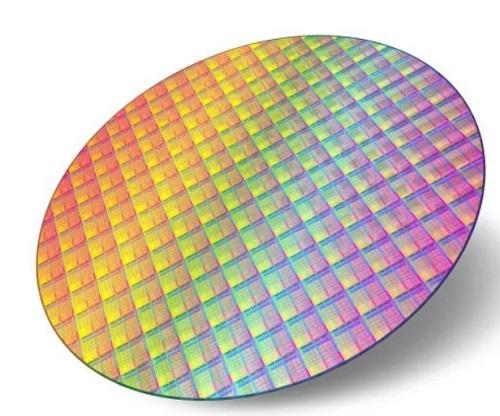
A Smart Fab is only as smart as its data. Old resistive heaters are slow. They have this annoying thermal lag that makes real-time adjustments a nightmare. IR lamps are different. They’re basically instant. We hook these up to PID controllers and digital feedback loops so you can see exactly what’s happening. It’s like having a live map of the heat across your wafer or panel. If you spot a cold spot, you just tweak the power for that specific zone. No need to kill the line or start over.
The Trade-offs (The “Gotchas”)
Now, it’s not all magic. High-intensity IR systems gethot—especially at the ends of the lamps. If you push the wattage to get those lightning-fast ramp-up times, your wiring and feedthroughs are going to feel the stress. If you don’t spec your cooling manifolds to handle that heat soak at the terminals, things will burn out. Fast. And one last tip: don’t forget the shielding. If you don’t block that IR radiation from hitting your vacuum sensors, you’re going to get some very weird readings.